If you’ve ever tried adding your coveted CBD tincture—perhaps a reputable brand like Joy Organics, known for USDA certified organic tinctures—to your sparkling water, only to watch it bead up and stubbornly float on the surface, you’re not alone. It’s a common problem that frustrates home mixologists and professional beverage developers alike. So, what’s going on here? Why does CBD oil separate in water, leading to that unsightly tincture beading on glass? And more importantly, how can you fix or avoid this?
The Lipophilic Nature of Cannabinoids
First, let’s get a bit nerdy with some chemistry basics. Cannabinoids—whether it’s CBD (cannabidiol), THC, or other compounds found in cannabis—are what chemists call lipophilic, which literally means “fat-loving.”
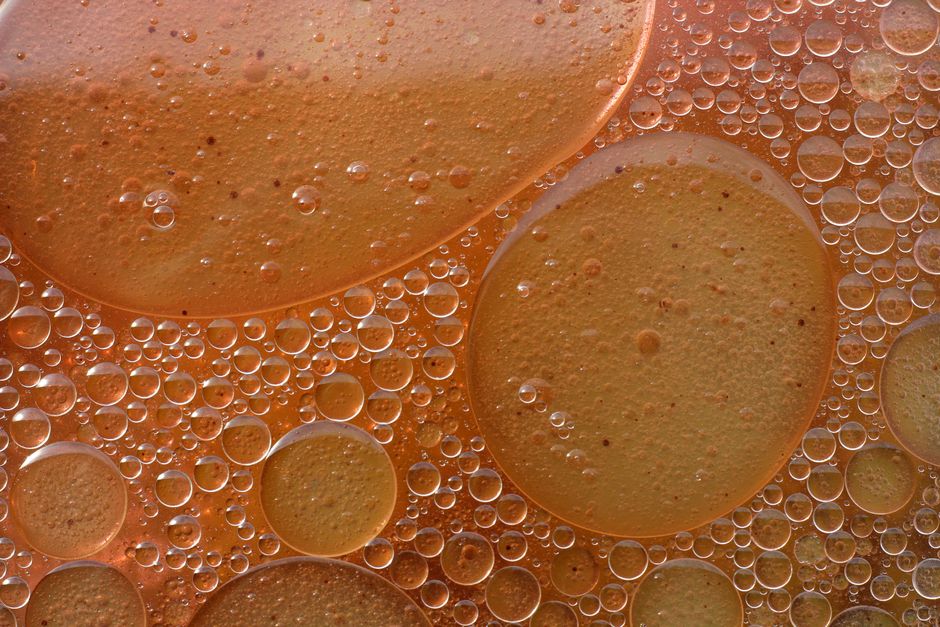
That’s right: cannabinoids dissolve well in oils and fats, not in water. When you pour a CBD tincture into your sparkling water, the cannabinoid-containing oil won’t mix. Instead, it floats on top, clumping into little droplets or beads. This phenomenon is why tinctures look suspiciously like tiny oil slicks on the surface rather than blending seamlessly into your drink.
Why Lipophilicity Matters in Beverage Formulation
This fat-loving characteristic is the starting point for understanding why traditional CBD tinctures don’t play nice in water-based drinks:
- Oil and water don’t mix: Think of olive oil or melted butter in water—they separate quickly because oil is less dense and hydrophobic. Visual and textural issues: Floating oil creates an unpleasant appearance and an inconsistent dose as the cannabinoids aren’t evenly distributed. Flavor impact: The oily layer can alter the mouthfeel and taste, often in ways that detract from your sparkling water experience.
Spotlight on Companies Like Joy Organics
Joy Organics stands out in the crowded CBD marketplace for several reasons, notably their USDA certified organic tinctures. These tinctures have clean ingredient lists and use high-quality carrier oils. However, despite the purity and certification, they still face the universal lipophilic challenge.
Joy Organics tinctures typically rely on MCT oil (medium-chain triglycerides) or hemp seed oil as carriers. These oils are fantastic at dissolving cannabinoids but have the same fundamental issue: they separate rapidly when dripped into water, carbonated or not.
Why Tinctures Fail in Clear Cold Drinks
The failure is twofold.
Dosing and distribution: Without proper emulsification, cannabinoids cluster together in oil droplets that don’t disperse evenly. You end up with inconsistent potency throughout your drink—an even bigger problem when your dosing requires precision. Carbonation complicates everything: The bubbles in sparkling water can encourage oils to coalesce even faster, promoting the floating "beads" of tincture that cling to glass instead of blending in. This is worse than flat water.Imagine sprinkling olive oil into seltzer: the oil beads up and refuses to dissolve. Your CBD tincture behaves the same way, flouting any hope of uniformity in that fizzy sip.
Tools You Know: Olive Oil and Butter—Similar Behavior, Same Problem
To visualize what’s going on, think about adding olive oil or melted butter into water—both are lipophilic, both separate out. In cooking, this is why vinaigrettes require vigorous shaking or an emulsifier like mustard to prevent separation. Butter, rich in fats, flaunts the same poor solubility in water. This culinary analogy illustrates why simple mixing isn’t enough for tinctures in beverages.
Emulsifiers That Actually Help: Gum Arabic and Lecithin
So how do you get that oil into your water and keep it there?
The answer lies in emulsifiers—ingredients that help mix oil and water into a stable emulsion. Two common and effective emulsifiers for cannabinoid beverages are:
- Gum Arabic: A natural polysaccharide obtained from acacia trees, it’s widely used in the beverage and confectionery industries. It creates a protective film around oil droplets, suspending them in water and preventing aggregation and separation. Lecithin: A phospholipid often derived from soy or sunflower, lecithin has a hydrophilic (water-attracting) head and a lipophilic tail. It acts as a molecular matchmaker between oil and water, stabilizing suspensions and emulsions.
Both of these have real-world track records in blending oils into water-based beverages, so look for tinctures or formulas that explicitly include these emulsifiers. Without them, your CBD oil will almost certainly part ways with your sparkling water.
Water-Soluble and Nanoemulsified CBD for Beverages
For those who want a truly seamless CBD drink experience—clear, consistent, and no floating oil slicks—there’s an emerging category of water-soluble or nanoemulsified CBD.
These formulations break CBD oil down into tiny nanoparticles—sometimes 100 nanometers or less—encapsulated in emulsifiers or surfactants, allowing for genuine dispersion in water. The benefits include:
- Enhanced bioavailability due to the tiny size particles. Uniform distribution in beverages, eliminating beading and surface oil. Clear or lightly tinted appearance, appropriate for sparkling water and cocktails.
While these products tend to be pricier and require advanced technology, they’re the future of CBD beverages. If you want to mix with sparkling water reliably, look for “water-soluble” or “nano CBD” on the label rather than generic “CBD oil tincture.”
Practical Tips to Avoid CBD Separation in Sparkling Water
Choose water-compatible products: Opt for water-soluble or nanoemulsified CBD instead of traditional oil tinctures. Shake Emulsified Tinctures Well: Some products contain emulsifiers but still need vigorous shaking before dosing. Use Emulsifiers: Consider adding a small pinch of gum arabic or lecithin powder if you’re DIY-ing formulations. Warm Your Water Slightly: Cold carbonated water exacerbates oil separation. Letting your sparkling water come to a slightly cooler than room temp might improve dispersion—though this sacrifices effervescence. Skip the Tincture in Sparkling Water: This harsh truth might sting, but tinctures simply are not designed for fizzy drinks. Instead, try tinctures in warm teas or smoothies where oil and heat help incorporation.Conclusion: What Really Happens When You Drop CBD Tincture in Sparkling Water?
Cannabinoids are lipophilic, which means they don’t mix with water naturally. When a CBD tincture, such as one from Joy Organics’ USDA certified organic line, hits sparkling water, the oil-based cannabinoids bead up and float, creating a frustrating separation that ruins the drink’s consistency and appearance.
The only way to overcome this fundamental oil-water incompatibility is via emulsification—using ingredients like gum arabic or lecithin to stabilize the mixture—or turning to innovative water-soluble or nanoemulsified CBD products specifically designed for beverages.
Until then, if you want a clean, uniform CBD-infused sparkling water, skip https://www.ediblela.com/cooking-and-mixing-with-cbd-what-actually-works the oil tincture. Either accept the beading, choose a different base liquid, or invest in a product engineered for water compatibility. Your taste buds—and your glass—will thank you.